

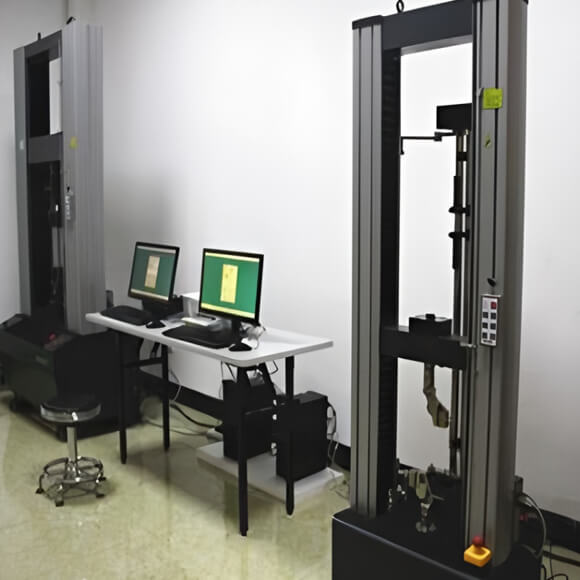
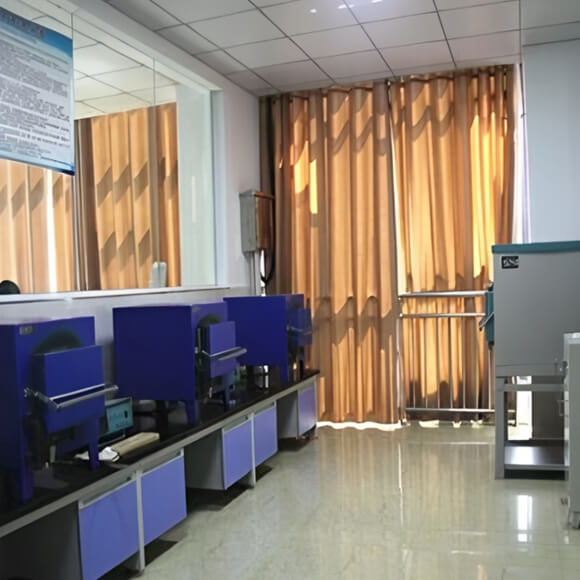
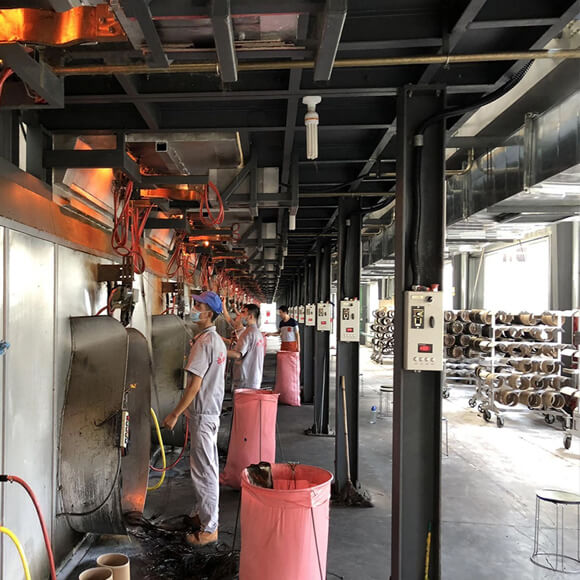
Today, as the green and low-carbon transformation has become an inevitable path for the global industrial sector, basalt fiber, as a "green industrial material" derived from natural volcanic rocks and renowned for its high strength and environmental-friendly characteristics, is rapidly growing and developing. We are about to launch a 10,000-ton-scale ultra-fine basalt fiber demonstration project, which is expected to redefine the industry competition landscape. This project not only fills the gap in the large-scale production of ultra-fine fibers but also builds a complete value chain of "resources + technology + ecology". As the organizer of the "Ultra-Fine Basalt Fiber Large-Scale Production and High-End Application Summit" held concurrently, Jumeisheng is leading the transformation of China's basalt fiber industry from "scale expansion" to "high-end breakthrough" in a historic manner.
1. Building a full industrial chain moat by leveraging resource advantages
In the field of basalt fiber, the purity of raw materials directly determines the product performance. Jumeisheng has its own dedicated basalt mine base with an annual mining capacity of 500,000 tons. The SiO₂ content in this ore is stable at 52%–55%, and the Al₂O₃ content is 15%–18%, providing high-quality "genetic materials" for ultra-fine fiber production. Compared with competitors relying on external procurement, Jumeisheng's raw material costs have been reduced by approximately 70%. Although the average industry ore price in 2023 was about 380 yuan per ton, Jumeisheng, through an integrated model of "own mines + intelligent mining", controlled the cost to be below 100 yuan per ton.
The key point is that this mine operates with a "green foundation". The team adopts an integrated "intelligent crushing + tailings recovery" process and combines artificial intelligence algorithms to optimize the mining process, achieving a mineral utilization rate of over 98%, and achieving "zero tailings" emissions. Traditional mining results in about 15% of the ore being discarded due to impurities, which not only wastes resources but also pollutes the environment. While Jumeisheng's spectral sorting technology can reuse SiO₂ content ≥ 48% ore for standard fiber production, maximizing resource utilization efficiency and aligning with China's "carbon neutrality" strategic goals.
From the "last mile" from my mine to the fiber, our execution speed is demonstrated:
A 3,600-square-meter factory with a modular steel structure design has compressed the traditional six-month construction period to three months (a 30% increase in efficiency).
The自主研发's drawing equipment combined with the internal intelligent control system enables the temperature fluctuation of the molten pool to be controlled within ±1°C (while the industry average is ±3°C).
Innovative scale: This facility is the first large-scale ultra-fine basalt fiber production base in southwestern China, with its annual production of ultra-fine fibers (diameter < 6 μm) enabling Jumeisheng to rapidly enter the industry's forefront.
2. Technological innovation: Achieving a 15% performance improvement
Jumeisheng's independently developed manufacturing process can produce basalt fibers with an tensile strength of 2,900 megapascals and an elastic modulus of 88 gigapascals, with a performance 15% higher than the industry average and competitive with international high-end brands. This breakthrough stems from the deep cooperation between Jumeisheng, Southeast University, and the National Basalt Fiber Engineering Technology Center.
In early 2025, this cooperation project solved the industry's pain point: stability control. Traditional basalt fiber production has fluctuations in strength (coefficient of variation CV of about 5%), affecting the reliability of downstream composite materials. While Jumeisheng's "gradient melting and stretching process" can precisely control the cooling rate from 1,500°C to 1,300°C, reducing the CV to below 3%. This ensures the uniformity of fiber performance, thus meeting the requirements of high-end applications.
The company holds 5 invention patents, covering various fields from raw material formulation to drawing equipment. Its "online ultra-fine fiber diameter detection device" solves the problem of real-time measurement, enabling immediate adjustments to the process to improve product consistency. This pursuit of excellence in innovation has also achieved commercial success: Jumisheng's basalt fiber reinforced composite materials have been used by several major automotive manufacturers for the interiors of electric vehicles, reducing the vehicle weight by 20% and increasing the strength by 30%. This has significantly enhanced the range and safety of the vehicles. Currently, these materials are being verified by several OEM companies, demonstrating great market potential.
3. Strategic Ecosystem: From Fiber Production to Material Solutions
The value of basalt fiber lies not only in production but also in application. Jumeisheng's strategy has shifted from fiber manufacturing to material solutions, focusing on three high-value-added areas and building a "technology + capital" ecosystem.
1. High-performance Composite Materials
In addition to the automotive sector, Jumeisheng's continuous basalt fiber panels are also used for lightweighting in aircraft interiors. Traditional aluminum alloy components weigh approximately 2.8 kilograms per square meter; while Jumeisheng's composite material alternatives weigh only 1.9 kilograms per square meter and possess UL94 V-0 level flame retardancy, meeting strict aviation standards.
2. Environmental Filtration
To address the challenges of industrial smoke gas treatment, Jumeisheng has developed a basalt fiber filter bag that can withstand 400°C. It employs the "fiber surface modification + optimized needle-punching process" technology.
 English
  中文版
中文版  Spain
Spain  Arabic
 Russian
 Korean
 Thai
Thai vietnamese
 Persian
 Deutsch
 Türkce
 日本語
日本語 Portuguese